





















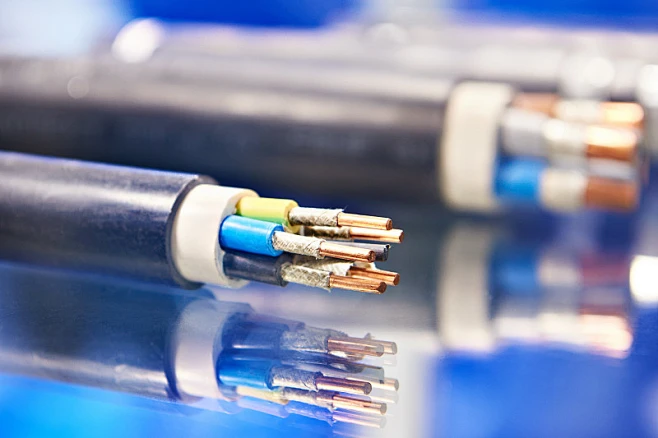
This paper focuses on the technical progress and market trends of RF connectors and round-hole female headers. RF connectors are evolving toward higher frequency and smaller form factors, while round-hole female headers keep achieving breakthroughs in plating processes and high-temperature resistant materials. The Asia-Pacific market registers remarkable growth, and supply chain localization is accelerating. The article also provides selection guidelines and application tips to help engineers optimize interconnection designs.
Within the electronic component sector, RF connectors and round-hole female headers, as critical basic interconnection components, continuously attract industry attention for their technical developments and market trajectories. Recently, with accelerated construction of 5G communication base stations, rising shipments of satellite internet terminals and upgraded electronic architectures in new energy vehicles, the demand structure for RF connectors is undergoing notable changes. Traditionally serving communication base stations and test instruments, RF connectors are now rapidly penetrating applications such as automotive radar, smart wearables and the Industrial Internet of Things. This trend imposes stricter requirements on the connectors’ frequency range, insertion loss and vibration resistance.
In terms of technical advances, RF connectors are evolving toward miniaturization, high frequency and high reliability. Taking board-to-board RF connectors as an example, their pitch has gradually shrunk from the early 2.5 mm to 1.5 mm or even smaller, while the supported operating frequency has increased from 6 GHz to above 15 GHz. This progress relies on breakthroughs in material science. The adoption of low-dielectric-constant materials such as liquid crystal polymer (LCP) and modified PEEK effectively reduces dielectric loss during signal transmission. Besides, multi-channel integrated design has become a new highlight. A single RF connector module can integrate four or even eight independent channels, greatly saving PCB space.
As another fundamental interconnection component, round-hole female headers also maintain strong market momentum. Compared with standard female headers, round-hole female headers adopt machined round-hole structures, featuring low contact resistance, long mating cycles and strong shock resistance. In industrial control, medical electronics and aerospace equipment, round-hole female headers are frequently tasked with reliable transmission of power and low-speed signals. Recent technical innovations of round-hole female headers are mainly reflected in three aspects: first, upgraded surface treatment processes. Selective gold plating or palladium-nickel alloy plating is applied to reduce precious metal consumption while guaranteeing contact reliability. Second, improved insulator body materials. High-temperature resistant LCP enables round-hole female headers to withstand the peak temperature of lead-free reflow soldering. Third, optimized structural design. For instance, dual-contact spring structures can further cut contact resistance and enhance resistance to fretting wear.
From a market trend perspective, public industry consulting reports predict that the global RF connector market will maintain a compound annual growth rate (CAGR) of over 6% in the next five years, with the Asia-Pacific region, especially China, contributing the most. Although the overall market size of round-hole female headers is smaller than that of RF connectors, its growth rate in high-end industrial control and medical sectors cannot be ignored, reaching approximately 8% annually. Notably, the trend of supply chain localization is accelerating. In the past, high-end RF connectors and precision round-hole female headers were mainly imported. Today, multiple industrial clusters in China have formed complete industrial chains covering materials, molds, electroplating and assembly. Lead times have been shortened from 8 weeks to less than 4 weeks.
Regarding consulting services and application tips, engineers shall prioritize impedance matching and voltage standing wave ratio (VSWR) metrics when selecting RF connectors. For round-hole female headers, plating thickness should be selected according to required mating cycles. For general industrial applications, gold plating thickness of no less than 0.38 μm is recommended. During installation, the cable stripping dimension of RF connectors must be precisely controlled to avoid signal reflection caused by burrs on the outer conductor. After wave soldering or reflow soldering for round-hole female headers, visual inspection and sampling tests of contact resistance are suggested to ensure no solder ball residue or terminal back-out occurs. For routine maintenance, RF connector interfaces should be cleaned regularly to prevent poor contact induced by dust and moisture; round-hole female headers must avoid long-term operation beyond rated current and voltage.
Overall, although RF connectors and round-hole female headers are conventional electronic components, they are gaining new vitality driven by emerging applications. High frequency, integration, high reliability and low-cost manufacturing have become common goals of the industry. For equipment manufacturers, in-depth understanding of the technical details and market dynamics of these two types of components will help optimize product designs and strengthen supply chain resilience. In the future, with advancing research on 6G communications and upgraded levels of intelligent driving, the technical standards and test specifications for relevant interconnection components will continue to be updated, deserving close attention from practitioners.